Are you looking to know The story behind necklaces and pendants then read this article to find out The story behind necklaces and pendants
INTRODUCTION
Necklaces may feel like a modern fashion staple, but their history stretches back far beyond recorded time. Long before jewellery stores and designer collections, people were already wearing objects around their necks not for trends, but for meaning. What makes necklaces and pendants so enduring isn’t just their beauty. It’s their closeness to the heart. They’ve always carried something personal.
WHERE IT ALL BEGAN
The earliest necklaces were simple and handmade. Prehistoric communities used shells, bones, stones, and even animal teeth to create strands worn around the neck. These weren’t luxury items. They were deeply symbolic. Some likely represented strength or protection. Others may have marked belonging within a group. Archaeologists have uncovered beaded jewellery dating back tens of thousands of years, showing that self-adornment has always mattered to us. At some point, the pendant emerged, a single object suspended from a cord. That small detail made a big difference. Instead of just decoration, the necklace now had a focal point statement pendant necklace Early pendants often acted as charms or amulets, believed to guard against harm or bring good fortune.
SYMBOLS OF POWER AND BELIEF
In ancient Egypt, necklaces were bold and unmistakable. Broad gold collars decorated with colourful stones symbolised wealth, protection, and spiritual connection. Jewellery wasn’t simply ornamental; it reflected divine belief and social standing.
In medieval Europe, pendants often carried religious significance. Crosses, engraved medallions, and lockets containing sacred items were worn as expressions of faith. At the same time, royalty and nobility used elaborate gemstone necklaces to quietly communicate status and authority.
Across parts of Asia, necklaces became essential to ceremonial life. Wedding jewellery, in particular, symbolised unity, prosperity, and commitment.
CRAFTSMANSHIP EVOLVES
As tools and techniques improved, so did jewellery design. The discovery of metals like bronze and gold allowed artisans to move beyond natural materials. Chains became more intricate. Gemstones were cut with precision. Designs grew more detailed. During the Renaissance, pendants transformed into miniature artworks. Craftsmen experimented with enamel, engraving, and sculpted forms. Some pieces even featured tiny portraits. Jewellery became not just symbolic, but expressive. Later, the Industrial Revolution made necklaces more accessible. Production methods improved, and beautiful designs were no longer limited to the wealthy.
PERSONAL STYLE IN THE MODERN ERA
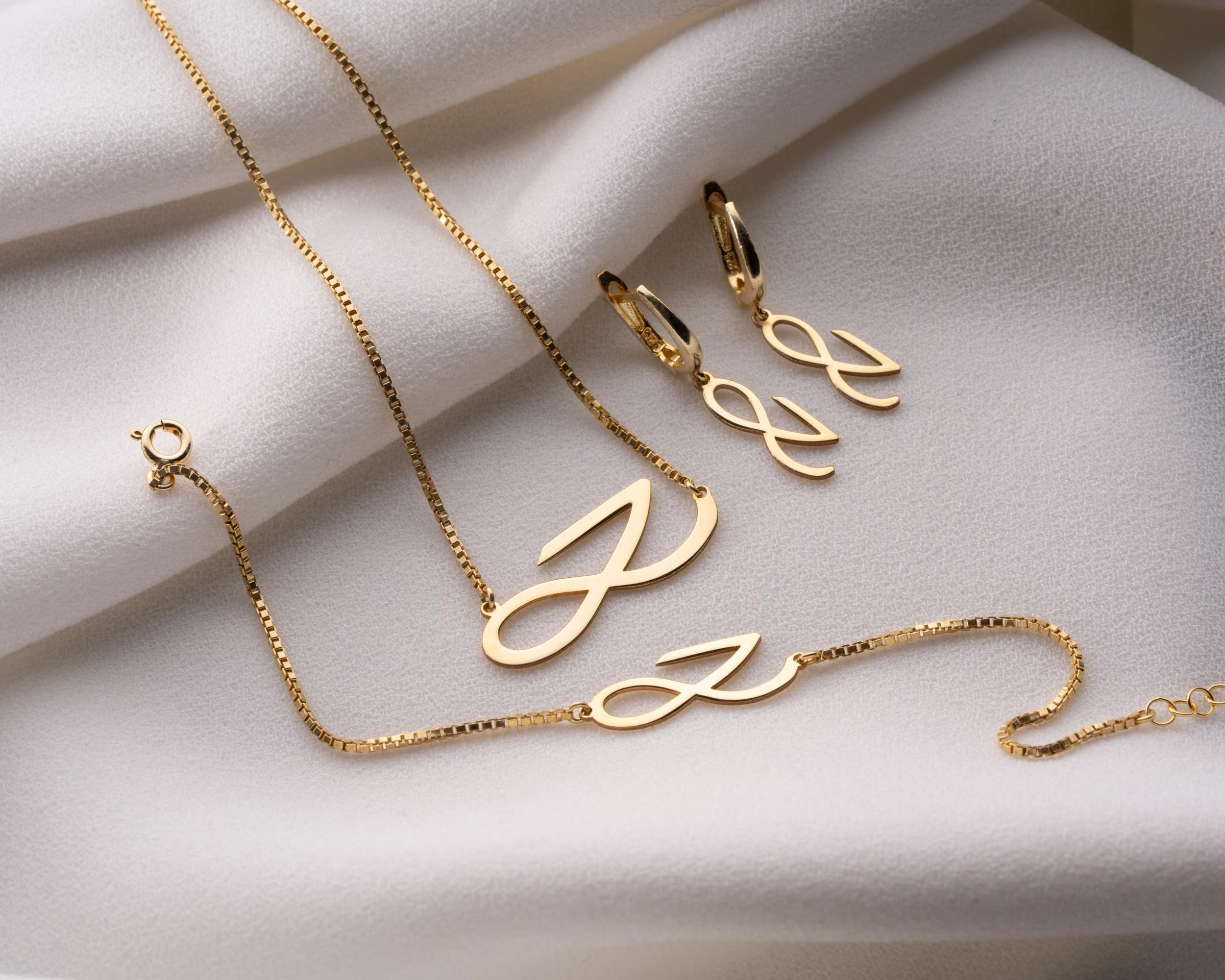
Today, necklaces and pendants mean different things to different people. Some prefer delicate chains worn daily without a second thought. Others choose bold statement pieces that define an outfit. Personalisation has become especially popular with initials, meaningful charms, birthstones, and engraved dates. These details turn jewellery into something uniquely individual. At the same time, modern buyers are more conscious. Ethical sourcing and sustainable materials now influence design choices, blending tradition with contemporary values.
CONCLUSION
Trends come and go, but necklaces remain. Perhaps it’s because they feel intimate. They rest near the heart, often holding memories, milestones, or beliefs. From ancient shells to custom-designed pendants, the purpose hasn’t changed much. Necklaces and pendants are still about expressing something meaningful with you, every day.